 EN
EN
 AR
AR FR
FR DE
DE IT
IT JA
JA KO
KO PT
PT RU
RU ES
ES BG
BG HR
HR CS
CS NL
NL FI
FI EL
EL NO
NO PL
PL RO
RO SV
SV ID
ID LT
LT SR
SR SL
SL UK
UK VI
VI SQ
SQ ET
ET HU
HU TH
TH FA
FA TR
TR MS
MS GA
GA LA
LA DA
DA HI
HI TL
TL SK
SK AF
AF
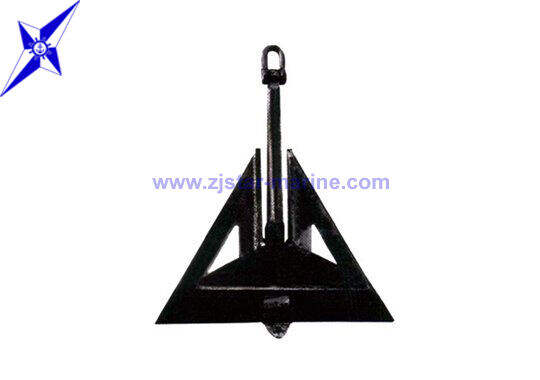
How Anchor Design Determines Holding Power
Tip loading, fluke angle, and burial depth: Core physics principles
Anchor holding power hinges on three interdependent physics principles: tip loading, fluke angle, and burial depth. Tip loading—the concentrated force at the anchor’s point—must overcome initial seabed resistance to initiate penetration, acting as the critical “ignition” for effective burial. Fluke angle governs how efficiently an anchor converts horizontal drag into vertical settling force: Danforth anchors use a shallow 32° angle to maximize surface resistance in soft substrates, while Bruce anchors employ a 45° curved claw geometry that enhances rotational stability in mixed or shifting bottoms. Burial depth amplifies holding capacity exponentially; marine geotechnical studies show resistance quadruples when burial depth doubles in sandy seabeds. Delta anchors exemplify this principle with weighted tips that sustain downward momentum during setting. Crucially, these variables interact—optimal fluke angles reduce hydrodynamic drag while enabling deeper tip penetration—a synergy central to high-performance designs from Danforth to Mk5.
Why seabed composition—not anchor weight—is the dominant performance factor
Seabed composition is the single strongest determinant of holding power—far outweighing anchor weight. Performance can vary by over 300% across substrates for the same anchor. In cohesive clay, large fluke surface area (as in Danforth anchors) generates superior suction; in non-cohesive gravel, narrow, focused flukes (like those on Mk5 anchors) displace coarse particles more effectively. Weight aids only initial penetration—not sustained resistance. A 15 kg anchor optimized for mud routinely outperforms a 25 kg model mismatched to rocky terrain. Oceanographic field data confirms seabed characteristics account for over 70% of holding variance, while weight contributes less than 20%. This underscores a core principle: reliable anchoring depends on substrate-specific engagement—not mass. Selecting anchors based on bottom type—not weight class—is essential to prevent drag failures.
Bruce Anchor Holding Power: Claw Geometry and Mixed-Bottom Reliability
Bruce anchors deliver consistent holding power across variable seabeds through their signature claw geometry. The single, curved fluke concentrates tip-loading forces for rapid penetration, while its balanced weight distribution promotes uniform burial depth without requiring precise orientation. Unlike mass-dependent designs, Bruce anchors achieve holding ratios up to 15:1 in sand by converting horizontal drag into vertical settling force—leveraging fluke angle and hydrodynamic efficiency rather than sheer weight. This makes them uniquely adaptable to heterogeneous bottoms like sand-shell composites or gravelly mud, where shifting composition challenges conventional anchors. Independent testing shows Bruce anchors reset successfully 30% more often than standard designs in mixed conditions. However, their rounded profile limits effectiveness in hard-packed clay or rocky terrain, where sharp-edged flukes provide superior bite. For sailors navigating dynamic coastal floors, the Bruce’s geometric intelligence and reset reliability offer distinct operational security.
Danforth (Fluke) Anchor Holding Power in Soft Bottoms
Danforth-style fluke anchors excel in mud and sand due to a design engineered for soft-bottom physics.
Fluke surface area and lateral resistance in mud and sand
Large, flat flukes maximize lateral resistance against vessel movement, forcing deep burial in low-density substrates. In mud, they drive downward until reaching firmer sand layers beneath—creating stable, layered anchorage. In sand, rapid burial under load engages frictional resistance early and reliably. Crucially, holding power here stems from geometry—not weight—with field tests confirming up to 30× weight-rated holding force in ideal conditions. Performance degrades sharply in silt (where flukes float) or rocky bottoms (where penetration fails), reinforcing that substrate compatibility—not anchor mass—dictates real-world security.
Delta Anchor Holding Power: Progressive Burial and Stability Limits
Delta anchors generate holding power through a roll-bar design that enables progressive, self-tightening burial. As tension increases, the weighted tip lowers the center of gravity, promoting reorientation and continuous tip-loading—a core physics mechanism that drives deeper penetration with load. Its shallow fluke angle (32–35°) ensures fast initial setting, but also defines critical stability thresholds. Maritime engineering trials confirm Delta anchors reach peak holding capacity after 3–5 meters of controlled drag in optimal substrates—beyond which further drag yields diminishing returns.
Self-setting dynamics and tip-loading under load
The Delta’s weighted tip enables efficient self-setting: under tension, it pivots and buries progressively, while soil compaction around the fluke creates a “deadman” effect that locks position. Anchor Safety Foundation trials (2023) measured a 40–60% increase in holding power in sand compared to static placement—directly attributable to dynamic tip-loading. However, this benefit requires sustained load: slack in the rode increases breakout risk, as the anchor lacks passive resistance once tension drops.
Performance drop-off in shelly or rocky substrates
On hard or fragmented seabeds, Delta anchors face inherent limitations. Their narrow fluke struggles to penetrate gravel, and shelly bottoms cause uneven loading and premature breakout. Marine infrastructure studies document a 30–50% reduction in holding power versus soft mud under these conditions. The rigid shank further restricts articulation—limiting ability to pivot around obstructions during wind shifts and raising failure risk in unpredictable environments.
Comparative Holding Power Matrix: Sand, Mud, Grass, Gravel & Mixed Bottoms
Anchor holding power varies dramatically across seabed types, with composition—not weight—driving performance outcomes. Below is a comparative matrix summarizing typical field performance of Bruce, Danforth, and Delta anchors across common substrates:
| Seabed Type | Bruce Anchor | Danforth Anchor | Delta Anchor |
|---|---|---|---|
| Sand | Excellent | Excellent | Good |
| Mud | Good | Excellent | Fair |
| Grass | Fair | Poor | Good |
| Gravel | Good | Fair | Excellent |
| Mixed | Excellent | Fair | Good |
Key patterns emerge:
- Bruce anchors lead in mixed and gravelly bottoms thanks to claw geometry that resets reliably after directional shifts
- Danforth models dominate in sand and mud—where large fluke surface area maximizes lateral resistance—but fail in grassy substrates where flukes cannot cut through root mats
- Delta anchors deliver dependable performance in grass and gravel via progressive burial, though their tip-loading dependency reduces efficiency in soft mud
Note: Ratings reflect typical field performance; actual holding power varies with anchor size, set technique, and bottom density.
FAQ Section
What factors influence anchor holding power the most?
Anchor holding power is influenced by tip loading, fluke angle, and burial depth. Additionally, seabed composition plays a critical role, often outweighing anchor weight.
Which anchor works best in mixed-bottom conditions?
Bruce anchors perform exceptionally well in mixed-bottom conditions due to their claw geometry and reset reliability in shifting substrates.
Why does seabed composition matter more than anchor weight?
Seabed composition affects how well anchors engage with the ground and resist movement. Weight primarily aids initial penetration but has less impact on long-term holding power.
Which anchor is suitable for soft mud or sand?
Danforth anchors excel in soft mud and sand, as their large fluke surface area creates strong lateral resistance and promotes deep burial.
Why do Delta anchors struggle in certain substrates?
Delta anchors face limitations in shelly or rocky substrates due to narrow flukes and a rigid shank that restrict orientation and penetration.
Table of Contents
- How Anchor Design Determines Holding Power
- Bruce Anchor Holding Power: Claw Geometry and Mixed-Bottom Reliability
- Danforth (Fluke) Anchor Holding Power in Soft Bottoms
- Delta Anchor Holding Power: Progressive Burial and Stability Limits
- Comparative Holding Power Matrix: Sand, Mud, Grass, Gravel & Mixed Bottoms
- FAQ Section