 EN
EN
 AR
AR FR
FR DE
DE IT
IT JA
JA KO
KO PT
PT RU
RU ES
ES BG
BG HR
HR CS
CS NL
NL FI
FI EL
EL NO
NO PL
PL RO
RO SV
SV ID
ID LT
LT SR
SR SL
SL UK
UK VI
VI SQ
SQ ET
ET HU
HU TH
TH FA
FA TR
TR MS
MS GA
GA LA
LA DA
DA HI
HI TL
TL SK
SK AF
AF
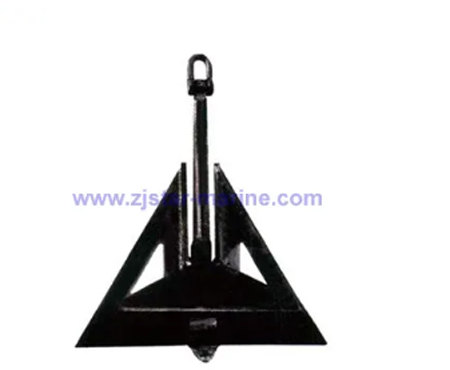
Material and Certification Standards for Offshore Anchor and Chain Systems
Corrosion-Resistant Materials: Galvanized Steel, AISI 316 Stainless Steel, and R3/R4 Grade Alloys
Offshore anchor and chain systems must withstand seawater corrosion, high hydrostatic pressure, and cyclic loading. Galvanized steel provides cost-effective protection through a sacrificial zinc coating validated in 1,000-hour salt spray testing. AISI 316 stainless steel delivers superior chloride resistance thanks to its 2–3% molybdenum content—critical for splash-zone and subsea components. For ultra-deepwater applications (>1,500 m), R3 and R4 grade alloy steels offer tensile strengths exceeding 800 MPa and significantly improved fatigue performance over conventional grades. Premature corrosion failure in marine chains can increase lifecycle replacement costs by $740k (Ponemon Institute, 2023), underscoring the economic imperative of material selection aligned with environmental severity.
Global Marine Certifications: ABS, DNV, BV, and ISO 9001 Compliance for Ship Anchor and Chain Integrity
Structural reliability and operational safety are assured through adherence to globally recognized marine certification frameworks. Leading manufacturers comply with American Bureau of Shipping (ABS) requirements for proof and breaking load testing, DNV’s fatigue endurance protocols (200,000+ stress cycles), and Bureau Veritas (BV) benchmarks for corrosion resistance. ISO 9001 certification enforces full traceability—from raw alloy sourcing through heat treatment, forging, and final assembly—reducing defect rates by 30% (DNV, 2023). Certified chains undergo Charpy impact testing at –20°C to verify low-temperature fracture resistance and magnetic particle inspection to detect subsurface flaws invisible to the naked eye. These integrated verification steps are essential for mitigating installation and service failures in extreme offshore environments like the North Sea.
Anchor and Chain Configurations for Floating Offshore Wind Farms
Catenary, Taut-Leg, and Tension-Leg Mooring Systems Using Large Anchor Chain Assemblies
Floating offshore wind farms rely on three principal mooring configurations—catenary, taut-leg, and tension-leg—each optimized for water depth, seabed conditions, and dynamic loading profiles. Catenary systems use long, suspended large anchor chain segments whose weight provides natural compliance and damping; they’re well-suited for moderate depths (up to 300 m). Taut-leg designs combine shorter, steeper-angle chains with high-modulus polyester ropes to reduce seabed footprint and enhance station-keeping stiffness. In ultra-deepwater deployments (>150 m), tension-leg systems employ near-vertical tethers anchored to fixed seabed foundations, requiring ship anchor and chain assemblies rated above 3,500 kN breaking strength. Per DNV-ST-0119, these systems mandate R4 or R5 grade alloy chains—engineered for >10⁷ stress cycles over a 25-year design life—with rigorous attention to diameter (up to 210 mm), weight-to-strength ratio, and corrosion mitigation strategies that directly influence CAPEX and OPEX.
Shared and Multiline Anchor Systems: Load Distribution, Redundancy, and Interoperability with Custom Anchor & Chain
Custom anchor & chain solutions enable shared-anchor configurations where a single foundation services multiple turbine mooring lines—typically 3 to 6 per cluster. This approach reduces seabed footprint by 35% while maintaining IEC 61400-3 safety margins. Key enablers include:
- Load-distribution hubs with forged connector links that evenly redirect dynamic stresses
- Interchangeable chain segments certified to ISO 1704 proof-test thresholds
- Emergency disconnect systems engineered for <45-second redundancy activation
Standardized shackles, Kenter links, and batch-certified chains ensure rapid component swaps during maintenance. Crucially, multiline interoperability depends on traceable material chemistry—particularly nickel-chromium alloys proven to resist pitting corrosion at chloride concentrations exceeding 19,000 ppm. When fully integrated, these systems deliver CAPEX savings of over $2.8M per 100MW floating wind farm and meet ABS Position Holding Class notations for dynamic positioning assurance.
Innovative Deepwater Anchor Technologies Integrated with High-Strength Chain
Deeply Embedded Ring Anchor (DERA): Rapid Installation and Holding Capacity Paired with Heavy-Duty Chain
The Deeply Embedded Ring Anchor (DERA) redefines deepwater mooring efficiency—achieving installation speeds up to 50% faster than conventional drag anchors while delivering holding capacities exceeding 200 tons. Its ring geometry distributes seabed reaction forces across multiple planes, enabling stable integration with R4-grade anchor and chain systems. The anchor’s curvature is specifically engineered to accommodate large anchor chain diameters up to 150 mm, eliminating localized stress concentrations at the shackle interface. By reducing vessel time-on-site, DERA-based deployments cut mooring installation costs by ~30% (MarineTech Journal, 2023).
Modular Helical Anchors: Seabed-Agnostic Deployment and Compatibility with Custom Chain with Anchor Assemblies
Modular helical anchors provide seabed-agnostic installation across variable substrates—from soft silts to dense clays—using interchangeable, rotating helix plates that embed without pre-drilling. Their segmented architecture allows precise customization for site-specific ship anchor and chain configurations while maintaining DNV-certified tensile strength and fatigue performance. Standardized connection interfaces ensure seamless integration with custom chain with anchor assemblies, preventing compatibility-related failures during load transfer events. The screw-in methodology reduces seabed disturbance by 80% versus impact-driven alternatives—supporting both engineering integrity and environmental stewardship in sensitive offshore wind development zones.
FAQ
What materials are commonly used for offshore anchor and chain systems?
Materials like galvanized steel, AISI 316 stainless steel, and R3/R4 grade alloy steels are frequently used due to their corrosion resistance, high tensile strength, and durability under extreme marine environments.
What certifications ensure the quality of anchor and chain systems?
Certifications from organizations like ABS, DNV, BV, and ISO 9001 ensure structural reliability, operational safety, and material traceability for anchor and chain systems.
Which mooring systems are ideal for floating offshore wind farms?
Catenary, taut-leg, and tension-leg mooring systems are common for floating offshore wind farms, chosen based on water depth and seabed conditions.
What are the cost benefits of using shared and multiline anchor systems?
Shared-anchor configurations reduce seabed footprint by 35% and can save over $2.8M per 100MW floating wind farm, while maintaining industry safety margins.
How do modular helical anchors benefit offshore installations?
Modular helical anchors offer seabed-agnostic deployment, reduce seabed disturbance by 80%, and ensure compatibility with custom chain and anchor assemblies.
Table of Contents
-
Material and Certification Standards for Offshore Anchor and Chain Systems
- Corrosion-Resistant Materials: Galvanized Steel, AISI 316 Stainless Steel, and R3/R4 Grade Alloys
- Global Marine Certifications: ABS, DNV, BV, and ISO 9001 Compliance for Ship Anchor and Chain Integrity
- Anchor and Chain Configurations for Floating Offshore Wind Farms
- Innovative Deepwater Anchor Technologies Integrated with High-Strength Chain
-
FAQ
- What materials are commonly used for offshore anchor and chain systems?
- What certifications ensure the quality of anchor and chain systems?
- Which mooring systems are ideal for floating offshore wind farms?
- What are the cost benefits of using shared and multiline anchor systems?
- How do modular helical anchors benefit offshore installations?