 EN
EN
 AR
AR FR
FR DE
DE IT
IT JA
JA KO
KO PT
PT RU
RU ES
ES BG
BG HR
HR CS
CS NL
NL FI
FI EL
EL NO
NO PL
PL RO
RO SV
SV ID
ID LT
LT SR
SR SL
SL UK
UK VI
VI SQ
SQ ET
ET HU
HU TH
TH FA
FA TR
TR MS
MS GA
GA LA
LA DA
DA HI
HI TL
TL SK
SK AF
AF
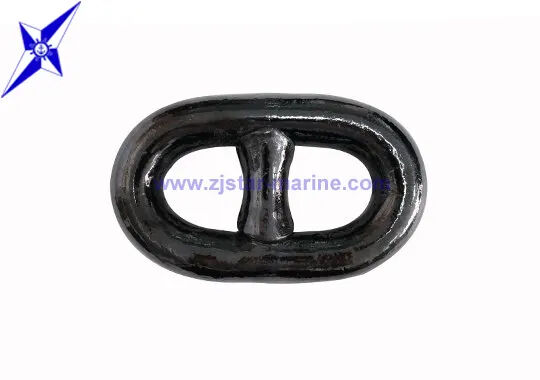
Kenter Shackle Anatomy and Core Function in Anchor Chain Connection
Structural breakdown: two interlocking halves, tapered pin, and locking wedge
A Kenter shackle consists of two symmetrical, forged steel halves that interlock precisely around a hardened tapered pin—secured by a hammer-driven locking wedge. This assembly creates a unitized, flush connection indistinguishable from adjacent chain links. Unlike conventional shackles, its seamless geometry eliminates stress concentrations by distributing load evenly across the entire structure. Component materials must match the anchor chain grade (e.g., Grade 3 or U3), with manufacturing governed by strict tolerances and verified through proof-load testing per DNV certification standards for marine components. As a result, certified Kenter shackles retain ≥95% of the chain’s minimum breaking load—typically rated between 1,250 kN and 3,000 kN depending on chain diameter.
How it enables modular, high-strength continuity between anchor chain sections
The interlocked design ensures uninterrupted load transfer between chain sections—critical for absorbing dynamic mooring forces during storms or rapid tidal changes. Its flush profile prevents snagging on windlass gypsies or hawse pipes during deployment and retrieval. This modularity supports operational flexibility:
- Chains of varying lengths can be combined to suit port depth requirements
- Damaged sections are replaced without rewiring the full chain
- Standardized 27.5-meter “shackle” segments align with established anchoring protocols
Fatigue testing confirms Kenter assemblies withstand over 50,000 load cycles at 45% of minimum breaking load—significantly exceeding bolted links, which degrade faster due to corrosion-prone threads. For this reason, they’re specified for ABS-classed vessels and mission-critical offshore mooring systems.
Installing Kenter Shackles: Step-by-Step Assembly and Comparison to Alternatives
Correct installation procedure for a Kenter joining link between chain sections
Proper installation is essential to preserve structural integrity under extreme marine loads. Follow this industry-standard sequence:
- Clean all mating surfaces—chain end links, shackle halves, pin, and wedge—to remove corrosion, salt residue, or debris
- Seat the two shackle halves fully into adjacent chain links, ensuring precise alignment
- Insert the tapered pin through both halves using a non-marring drift punch
- Drive the locking wedge into the pin’s recess until fully seated; seal with molten lead or an approved marine-grade compound
- Conduct proof-load testing at 20% above working load limit before commissioning
Visual inspections every six months are mandated to detect wear, deformation, or corrosion at high-stress interfaces—particularly where the wedge contacts the pin.
Kenter vs. D-shackle vs. bolted joining links: strength, reliability, and maintenance trade-offs
Kenter shackles deliver superior load integrity: retaining 95–100% of chain-grade strength versus 80–90% for D-shackles and 85–95% for bolted links. Key distinctions include:
| Feature | Kenter Shackle | D-Shackle | Bolted Link |
|---|---|---|---|
| Fatigue Resistance | Excellent (integrated design) | Moderate (stress points) | Good (when torqued properly) |
| Corrosion Vulnerability | Low (sealed mechanism) | High (exposed threads) | Medium (bolt thread exposure) |
| Maintenance Cycle | 6–12 months (wedge inspection) | Monthly (mousing integrity) | Quarterly (torque verification) |
While D-shackles offer quick field installation and bolted links allow in-situ repairs, Kenter shackles provide the optimal balance of strength, longevity, and safety for permanent anchor chain connections—especially where cyclic loading and environmental exposure demand uncompromising reliability.
Why Kenter Shackles Are Essential for Anchoring Safety and Load Integrity
Breaking strength retention (≥95% of chain grade) and fatigue resistance under cyclic loading
Kenter shackles ensure the connection never becomes the weakest link—retaining at least 95% of the anchor chain’s certified breaking strength. This performance threshold is vital during storm conditions or sudden load spikes, where even marginal strength loss could trigger catastrophic failure. Their integrated geometry distributes stress uniformly, minimizing localized fatigue and extending service life. Independent marine engineering assessments confirm properly installed units endure more than 10,000 load cycles without measurable deformation—and outperform alternatives by up to 40% in accelerated saltwater corrosion testing. This durability directly enhances crew safety, cargo security, and vessel integrity. When paired with routine inspections for wear and corrosion, Kenter shackles deliver predictable, long-term performance in demanding offshore environments.
Kenter Shackles and the '1 Shackle of Anchor Chain' Unit: Standardization and Practical Use
How Kenter shackles define the standard 27.5 m (90 ft) 'shackle' unit in marine anchoring systems
The term “one shackle”—universally recognized as 27.5 meters (90 feet)—originates from the physical spacing between Kenter joining links in traditional 15-fathom chain segments. By serving as consistent, repeatable connection points, Kenter shackles enable rapid, error-resistant chain length estimation during anchoring operations. For example, deploying “three shackles” equals exactly 82.5 meters—streamlining communication, improving situational awareness, and supporting safer decision-making in low-visibility or emergency scenarios. International standards—including ISO 1704—formalize this convention to ensure interoperability across global fleets, port infrastructure, and regulatory frameworks. The Kenter-defined unit also simplifies inventory management, maintenance scheduling, and load-calculations, reducing training overhead while enhancing consistency in mooring procedures worldwide.
FAQs
What is a Kenter shackle?
A Kenter shackle is a mechanical joining link used to connect sections of marine anchor chains. It is comprised of two interlocking halves, a tapered pin, and a locking wedge that creates a flush, high-strength connection.
What makes Kenter shackles better than D-shackles or bolted links?
Kenter shackles retain 95–100% of the chain's breaking strength, have excellent fatigue resistance, and a sealed design that lowers corrosion vulnerability. They also require less frequent maintenance than D-shackles and offer superior load distribution compared to both alternatives.
How are Kenter shackles installed?
Installation involves cleaning the components, aligning the two shackle halves, inserting the tapered pin, driving the locking wedge to secure it, and sealing the connection with lead or a marine-grade compound. Proof-load testing is then conducted before commissioning.
What is the significance of the '1 shackle' unit?
The term '1 shackle' refers to 27.5 meters (90 feet) of chain length, standardized for marine anchoring systems. Kenter shackles serve as key connecting points, making chain length measurements and anchor deployment more streamlined and accurate.
How often should Kenter shackles be inspected?
Visual inspections are recommended every six months to assess wear, deformation, and corrosion, especially at the interfaces between the wedge and pin.
Table of Contents
- Kenter Shackle Anatomy and Core Function in Anchor Chain Connection
- Installing Kenter Shackles: Step-by-Step Assembly and Comparison to Alternatives
- Why Kenter Shackles Are Essential for Anchoring Safety and Load Integrity
- Kenter Shackles and the '1 Shackle of Anchor Chain' Unit: Standardization and Practical Use
- FAQs