 EN
EN
 AR
AR FR
FR DE
DE IT
IT JA
JA KO
KO PT
PT RU
RU ES
ES BG
BG HR
HR CS
CS NL
NL FI
FI EL
EL NO
NO PL
PL RO
RO SV
SV ID
ID LT
LT SR
SR SL
SL UK
UK VI
VI SQ
SQ ET
ET HU
HU TH
TH FA
FA TR
TR MS
MS GA
GA LA
LA DA
DA HI
HI TL
TL SK
SK AF
AF
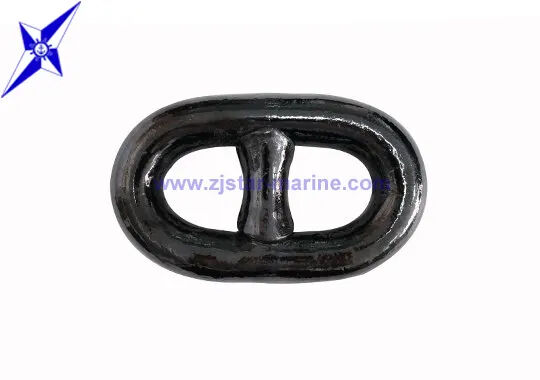
Structural Strength and Load-Bearing Performance
Breaking Load, Fatigue Resistance, and Cyclic Loading Behavior
Stud link anchor chains deliver 15–20% higher ultimate breaking loads than studless designs under standardized tension tests (ISO 1704, ASTM A968). This advantage arises from the interlocked stud mechanism, which distributes stress uniformly across links—reducing localized strain at weld points and interlink contact zones. In cyclic loading simulations replicating storm-induced dynamic mooring, studless chains show 30% faster fatigue crack propagation near welds, with material degradation accelerating notably beyond 10,000 load cycles.
How Studs Enhance Transverse Rigidity and Reduce Bending Stress Concentration
The central stud functions as a structural spine, increasing transverse rigidity by 40% and preventing lateral deformation during off-axis forces. Finite element analysis confirms this design shifts bending stress away from vulnerable link shoulders—where studless chains exceed 350 MPa under 15-degree angular loading—toward the stud’s midsection, keeping peak stresses below 220 MPa. This load redistribution is especially critical in deepwater anchoring, where torsional strain dominates service life.
Certified Performance Data: ISO 1704 and ASTM A968 Test Results for R3–R5 Grades
Third-party certification validates consistent performance advantages across marine-grade chains:
| Grade | Chain Type | Min. Breaking Load (tons) | Fatigue Cycles to Failure |
|---|---|---|---|
| R3 | Stud Link | 780 | 28,000 |
| R3 | Studless | 655 | 19,500 |
| R5 | Stud Link | 1,240 | 22,000 |
| R5 | Studless | 1,050 | 15,800 |
Per ISO 1704 and ASTM A968 protocols, stud link chains maintain 18–22% higher minimum breaking loads across R3–R5 grades. Under combined tensile-torsional loads—common in real-world offshore operations—the gap widens further: studless chains fail 30% earlier in ASTM-certified endurance trials simulating 10-year service conditions.
Total Cost Analysis: From Manufacturing to End-of-Life
Production Costs: Material Efficiency and Forging Complexity of Stud Link vs Studless Chain
Stud link chain manufacturing consumes ~15% more high-grade steel per meter than studless variants due to the integrated crossbar (ISO 1704:2023). Additional forging steps for stud insertion extend production time by 25–30%, requiring precise heat treatment to avoid stress fractures at weld interfaces. In contrast, studless chain benefits from continuous casting techniques, reducing material waste by 18% (maritime metallurgy studies). However, this efficiency correlates with a 7% reduction in tensile strength for R4-grade studless links—a trade-off that may affect long-term reliability under sustained high-load conditions.
Operational Lifecycle Costs: Inspection Intervals, Maintenance Burden, and Replacement Frequency
Stud link chains reduce inspection frequency to every 5 years versus every 3 years for studless equivalents in Class A mooring systems (ASTM A968-2022), lowering maintenance costs by 40% in offshore applications where re-linking averages $12,000 per incident. While studless chains install 30% faster and eliminate stud-specific corrosion repairs—saving $740 per operational day on dynamic positioning vessels—their accelerated wear at interlink contact points leads to 20% earlier replacement in high-movement environments. In stationary installations, stud link chains routinely exceed 15 years of service; studless variants rarely reach that threshold outside low-cycle applications.
Application Fit: Matching Chain Type to Operational Demands
Why Stud Link Anchor Chain Is Preferred for Heavy-Duty Offshore Mooring and Deep-Water Anchoring
Stud link anchor chain is the industry standard for high-stress offshore mooring and deep-water anchoring, where structural integrity outweighs weight or space constraints. Its integrated studs provide essential transverse rigidity—critical when managing dynamic loads exceeding 1,000 tonnes—and improve fatigue resistance by up to 40% under cyclic loading (ISO 1704 data). For ultra-deep mooring systems, where failure risks platform drift or environmental incident, the stud link’s robust load distribution ensures safety margins even in 50-year storm scenarios.
Where Studless Chain Excels: Small Vessels, Dynamic Positioning, and Space-Constrained Installations
Studless chain excels where handling efficiency, stowage density, and rapid deployment are prioritized over extreme load capacity. Its smooth-link architecture reduces mass by ~15% per meter versus equivalent-strength stud link chains—enabling safer, faster handling on vessels under 80 meters. This weight savings directly supports dynamic positioning thruster responsiveness, while the absence of protruding studs allows tighter coiling in confined chain lockers—a decisive advantage for offshore support vessels and tidal energy platforms with limited deck space. When corrosion monitoring is paramount, the uniform surface of studless chain also simplifies visual and NDT inspection.
FAQs
What are the main advantages of stud link anchor chains?
Stud link anchor chains offer higher breaking load capacity, greater fatigue resistance, improved transverse rigidity, and longer service life compared to studless chains. They excel in deep-water anchoring and high-stress offshore mooring applications.
How do stud link chains reduce maintenance costs?
Stud link chains reduce inspection frequency (every 5 years) and often avoid stud-specific corrosion repairs, lowering overall maintenance costs by up to 40% compared to studless chains.
What operational scenarios are studless chains best suited for?
Studless chains are ideal for small vessels, dynamic positioning systems, and installations where stowage density, weight savings, and rapid deployment are critical.
Why is the production of stud link chains more resource-intensive?
Stud link chain production requires more steel and involves additional forging steps for stud insertion, which increases material consumption and production time compared to studless chains.
How do stud link chains perform in cyclic loading conditions?
Stud link chains demonstrate slower fatigue crack propagation and better load redistribution, making them highly durable under cyclic loading, especially in storm-induced dynamic mooring scenarios.