 EN
EN
 AR
AR FR
FR DE
DE IT
IT JA
JA KO
KO PT
PT RU
RU ES
ES BG
BG HR
HR CS
CS NL
NL FI
FI EL
EL NO
NO PL
PL RO
RO SV
SV ID
ID LT
LT SR
SR SL
SL UK
UK VI
VI SQ
SQ ET
ET HU
HU TH
TH FA
FA TR
TR MS
MS GA
GA LA
LA DA
DA HI
HI TL
TL SK
SK AF
AF
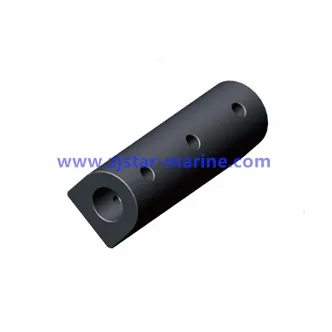
How Rubber Fenders Absorb Berthing Energy and Prevent Damage
Physics of impact absorption: compression, deformation, and energy dissipation
Rubber fenders protect docks by converting a vessel’s kinetic energy into strain energy through controlled, reversible deformation. Upon impact, the fender compresses—its viscoelastic polymer network stretches, slides, and rebounds in a process known as hysteresis. This converts up to 70% of incoming kinetic energy into low-level heat, significantly reducing peak impact forces compared to rigid structures. Crucially, rubber offers progressive resistance: initial soft compression cushions sudden contact, while rising stiffness prevents bottoming-out. This dual-phase response distributes force across the fender surface, eliminating localized stress concentrations that cause concrete spalling or hull denting.
Why berth fenders outperform rigid docking solutions in safety and longevity
Rubber fenders deliver measurable safety and durability advantages over steel or concrete alternatives by absorbing—and not merely transferring—impact energy. Rigid bumpers transmit nearly all berthing force directly into dock structures and vessel hulls; rubber systems redistribute and dissipate it. This fundamental difference yields consistent operational benefits:
| Performance Factor | Rigid Fenders | Rubber Berth Fenders |
|---|---|---|
| Peak Impact Force | 100% transfer | ≤30% transfer (Pilebuck 2024) |
| Dock Damage Frequency | High (annual repairs) | Low (5–7 year maintenance cycles) |
| Vessel Hull Damage Risk | Significant | Minimal |
| Tidal Range Adaptability | Limited | High (self-adjusting compliance) |
Rubber’s flexibility accommodates vessel drift during tidal shifts and wave action, reducing structural fatigue in pilings by 40%. With proper installation and maintenance, service life exceeds 15 years—tripling that of comparable steel fenders. Its continuous energy absorption during prolonged contact—such as during storm surges or wind-driven vessel movement—also prevents cumulative damage invisible to routine inspection.
Matching Rubber Fender Type to Vessel and Dock Requirements
Comparing common designs: cylindrical, cone, cell, arch, and D-fenders
Five primary rubber fender geometries serve distinct operational demands, each balancing energy absorption, reaction force, and spatial constraints:
| Design | Energy Absorption | Reaction Force | Space Efficiency | Best Application |
|---|---|---|---|---|
| Cylindrical | Medium–High | Medium | Moderate | Small marinas |
| Cone | Very High | Low | High | Tanker terminals |
| Cell | Extremely High | Very Low | Low | Container ports |
| Arch | High | Medium | Moderate | Multidirectional berths |
| D-type | Medium | High | Very High | Narrow piers |
Cylindrical fenders provide predictable, uniform compression and straightforward mounting—ideal for moderate-traffic facilities. Cone fenders use tapered geometry to increase contact area progressively, minimizing peak hull pressure. Cell fenders leverage internal friction chambers for maximum energy dissipation under high-load, low-rebound conditions. Arch fenders offer omnidirectional protection with inherent tolerance for oblique angles. D-fenders maximize shear resistance in minimal vertical space—critical where headroom or clearance is constrained.
Selecting pier fenders or wharf fenders based on vessel size, draft, and tidal range
Fender selection must align with three interdependent variables: vessel displacement, draft, and local hydrodynamic conditions. For vessel size, match fender height to the ship’s typical impact zone—generally between one-third and one-half of its loaded draft. Large vessels (>50,000 DWT) require high-energy designs like cone or cell fenders; smaller craft (<10,000 DWT) perform reliably with cylindrical or D-type units.
In high-tidal environments (≥4 m variation), floating or suspended fender systems maintain consistent contact across water levels—eliminating gaps that cause uncontrolled impacts. Shallow-draft vessels (<8 m) need low-mounted pier fenders to avoid hull scraping at low tide, whereas deep-draft ships benefit from multi-elevation wharf fender arrays. Tidal velocity matters too: regions with strong currents favor arch fenders for their multidirectional stability. Ultimately, the fender’s reaction force curve must stay within the vessel’s displacement-based load tolerance to prevent structural overload during compression.
Ensuring Long-Term Dock Integrity with Proper Fender Installation and Maintenance
Precise installation and disciplined maintenance are non-negotiable for preserving both fender performance and dock integrity. Misalignment—even minor angular deviation—causes uneven load distribution, accelerating wear on brackets, fasteners, and adjacent concrete. Always follow manufacturer torque specifications: under-tightened hardware loosens under cyclic loading; over-tightened bolts induce stress cracking in rubber or substrate materials.
Post-installation, conduct biannual inspections focused on surface integrity (cracks, cuts, abrasions), chemical exposure signs (swelling, discoloration), and mounting hardware corrosion. Early detection reduces replacement costs by up to 60% versus deferred intervention (Port Technology International 2023). Store spare pier or floating fenders vertically in shaded, climate-controlled areas to prevent UV degradation and permanent set—two leading causes of premature failure. Complement visual checks with rebound testing to verify retained elasticity and energy absorption consistency. When executed proactively, this regimen extends functional service life by 8–12 years, directly lowering lifecycle costs and reinforcing long-term structural safety.
Frequently Asked Questions (FAQ)
What is the role of rubber fenders in dock safety?
Rubber fenders absorb and redistribute kinetic energy during vessel docking, reducing impact forces on both vessels and dock structures. This ensures long-term safety and structural integrity.
Which type of rubber fender is suitable for large vessels?
For large vessels (over 50,000 DWT), cone or cell fenders are ideal due to their high energy absorption and low reaction force characteristics.
How does tidal range affect fender selection?
In high-tidal environments, floating or suspended fenders are best suited to maintain consistent contact across varying water levels and prevent uncontrolled impacts.
What maintenance routine should be followed for rubber fenders?
Conduct biannual inspections focusing on surface damage, chemical exposure, and hardware corrosion. Proper storage and rebound testing also enhance the fenders' lifespan and performance.
What advantages do rubber fenders offer over rigid fenders?
Rubber fenders absorb impact energy, reducing structural damage risk, improving longevity, and providing greater adaptability to tidal ranges, unlike rigid fenders that transfer the entire impact force.