 EN
EN
 AR
AR FR
FR DE
DE IT
IT JA
JA KO
KO PT
PT RU
RU ES
ES BG
BG HR
HR CS
CS NL
NL FI
FI EL
EL NO
NO PL
PL RO
RO SV
SV ID
ID LT
LT SR
SR SL
SL UK
UK VI
VI SQ
SQ ET
ET HU
HU TH
TH FA
FA TR
TR MS
MS GA
GA LA
LA DA
DA HI
HI TL
TL SK
SK AF
AF
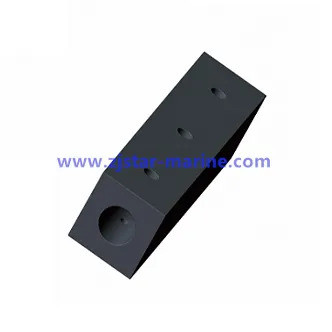
How Heavy-Duty Rubber Fenders Absorb Berthing Energy While Minimizing Reaction Force
Why Mega-Vessels Demand Higher Energy Absorption: From 300,000+ DWT Cargo Ships to 300m+ Cruise Liners
Modern mega-vessels—cargo ships exceeding 300,000 deadweight tons (DWT) and cruise liners over 300 meters long—generate extraordinary kinetic energy during berthing. A 200,000 DWT tanker approaching at just 0.15 m/s produces over 2,200 kJ of energy—comparable to a 100-ton truck striking at 30 km/h. This surge stems from exponential increases in mass and complex berthing dynamics, where minor deviations in speed or angle dramatically amplify impact forces. Traditional fender systems lack the capacity to safely absorb such energy without risking hull deformation or dock infrastructure damage.
The Core Engineering Principle: Balancing Energy Absorption Capacity and Reaction Force in Ship Rubber Fender Design
Effective ship rubber fender design hinges on optimizing the energy–reaction relationship: absorbing maximum kinetic energy while limiting peak reaction force to safe thresholds—typically below 60% of hull yield strength. High-performance fenders achieve this through controlled compression of advanced rubber compounds, converting motion into elastic potential energy. Critical innovations include:
- Progressive stiffness gradients that flatten force peaks across the deflection curve
- Hysteresis-based energy dissipation in reinforced rubber matrices
- Geometric optimization—such as conical profiles—that enhance load distribution and angular tolerance
The ideal result is a near-linear force-deflection response with minimal spikes, protecting both vessel integrity and port infrastructure.
Real-World Validation: Super Cell Fenders at Rotterdam’s Maasvlakte II — 42% Lower Peak Reaction Force at 12 MJ Impact
At Europe’s busiest port, Maasvlakte II terminal upgraded to Super Cell fenders and recorded a 42% reduction in peak reaction force during instrumented 12 MJ impacts—the equivalent of a Panamax vessel berthing at 0.2 m/s. These results confirm how intelligent force management enables safer operations for mega-vessels while extending infrastructure service life:
| Metric | Traditional Fenders | Super Cell Fenders | Improvement |
|---|---|---|---|
| Peak Force | 1,850 kN | 1,073 kN | 42% reduction |
| Energy Absorption | 12 MJ | 12 MJ | Equal capacity |
| Hull Stress | 38 MPa | 22 MPa | 42% safer |
Selecting the Right Rubber Fender by Vessel Type, Berthing Energy, and Environmental Conditions
Cruise Ship vs. Cargo Ship Berthing Dynamics: Precision Low-Speed Contact vs. High-Mass, Variable-Angle Impact
Cruise ships prioritize gentle, precise contact at ultra-low speeds (0.05–0.1 m/s) to preserve delicate hull finishes and ensure passenger comfort. Their fenders must deliver consistent, low-reaction-force performance across floating dock systems. In contrast, cargo vessels above 300,000 DWT impose high-mass, variable-angle impacts—up to 10°—driven by wind and current. These conditions demand greater angular tolerance and higher energy absorption capacity. Key distinctions guide fender selection:
| Parameter | Cruise Ships | Cargo Vessels |
|---|---|---|
| Berthing Speed | 0.05–0.1 m/s | 0.15–0.2 m/s |
| Contact Angle | <5° (controlled) | 5°–10° (variable) |
| Critical Focus | Hull preservation | Structural integrity |
| Fender Priority | Minimal reaction force | Maximum energy absorption |
ISO 17357-1:2014–Compliant Energy Calculation: Integrating Displacement, Approach Velocity, Angle, and Tidal Variation
Accurate fender sizing follows ISO 17357-1:2014, using the formula E = 0.5 × M × V² × Cm × Cs × Cθ, where:
- M = vessel displacement mass
- V = perpendicular approach velocity
- Cm = hydrodynamic mass coefficient (1.5–2.0)
- Cs = berth softness factor (0.9–1.0 for solid docks)
- Cθ = angle correction factor (reducing effective energy by ~15% at 10°)
Tidal variation (±3 m) further influences effective fender height by 30–40%, requiring dynamic compression allowances to prevent under- or over-sizing—and to maintain optimal reaction force profiles.
Top Heavy-Duty Rubber Fender Types: Cone, Cylindrical, and Hybrid Pneumatic–Rubber Solutions
Cone and Cylindrical Fenders in Cruise Ship Terminals: Why PortMiami and Barcelona Rely on These for Floating Dock Systems
PortMiami and Barcelona deploy cone and cylindrical rubber fenders as foundational elements of their floating dock systems—optimized for low-speed, high-precision cruise ship berthing. Cone fenders use tapered geometry to deliver progressive resistance, reducing peak reaction forces by 30% versus square-section alternatives while accommodating tidal fluctuations. Cylindrical units provide uniform compression ideal for vessels over 300 meters, distributing energy evenly across the hull to prevent localized stress or rebound-induced misalignment—critical when managing frequent docking of 5,000+ passenger ships in spatially constrained terminals.
Hybrid Pneumatic–Rubber Composite Fenders: Emerging Standard for Oil & Gas Jetties Requiring >18 MJ Absorption
For oil and gas jetties handling 300,000+ DWT tankers, hybrid pneumatic–rubber fenders have become the emerging standard—delivering energy absorption beyond 18 MJ. Their dual-phase design features a compressed-air core that dynamically absorbs high-mass impacts, paired with an abrasion- and corrosion-resistant rubber shell engineered for saline exposure and oblique angles up to 15°. Independent testing confirms these systems reduce peak reaction forces by 42% compared to solid rubber alternatives, meeting ISO 17357-1:2014 safety margins for hydrocarbon terminals—where structural failure carries unacceptable operational and environmental risk.
Long-Term Durability and Customization for Marine Environments
UV-Stabilized EPDM Compounds with Zinc Oxide Reinforcement: Achieving 25+ Years of Service Life in Tropical Saline Exposure
Marine-grade rubber fenders endure relentless degradation from saltwater immersion, intense UV radiation, and biofilm growth—particularly in tropical ports like Singapore and the Caribbean. UV-stabilized EPDM (Ethylene Propylene Diene Monomer), reinforced with zinc oxide, combats this through molecular cross-linking that resists ozone cracking and thermal aging. Zinc oxide acts as a sacrificial anode, neutralizing chloride and sulfide ions before they penetrate the polymer matrix—extending proven service life beyond 25 years in high-salinity, high-UV environments, where conventional rubber typically degrades in under 15.
Customization ensures longevity aligns with operational demands:
- Shore A hardness tailored between 50–70 to balance energy absorption and abrasion resistance
- Layered compound designs for tidal zones experiencing cyclic wet-dry exposure
- Antimicrobial additives for harbors prone to persistent biofilm buildup
This adaptability sustains optimal performance—whether shielding cruise ship hulls with minimal reaction force or defending heavy cargo berths against repeated high-energy impacts—without compromising decades-long durability.
FAQ Section
What are heavy-duty rubber fenders used for?
Heavy-duty rubber fenders are designed to absorb berthing energy during vessel docking while minimizing reaction forces to protect ships and port infrastructure from damage.
How do fenders reduce reaction forces during docking?
Fenders use advanced rubber compounds, progressive stiffness gradients, and geometric optimization to distribute load evenly and minimize force peaks, protecting vessel integrity and dock structures.
Why are hybrid pneumatic–rubber composite fenders preferred for oil and gas jetties?
Hybrid pneumatic–rubber composite fenders combine high energy absorption with corrosion-resistant shells, making them ideal for environments requiring durability and safety under extreme conditions.
How is energy absorption calculated for rubber fenders?
Energy absorption is calculated using ISO 17357-1:2014 standards, factoring in displacement mass, approach velocity, angle, berth softness, and tidal variation to determine precise fender sizing.
What type of rubber is best for tropical marine conditions?
UV-stabilized EPDM compounds reinforced with zinc oxide are ideal for tropical conditions, offering resistance to UV radiation, saltwater corrosion, and biofilm growth for extended service life.
Table of Contents
-
How Heavy-Duty Rubber Fenders Absorb Berthing Energy While Minimizing Reaction Force
- Why Mega-Vessels Demand Higher Energy Absorption: From 300,000+ DWT Cargo Ships to 300m+ Cruise Liners
- The Core Engineering Principle: Balancing Energy Absorption Capacity and Reaction Force in Ship Rubber Fender Design
- Real-World Validation: Super Cell Fenders at Rotterdam’s Maasvlakte II — 42% Lower Peak Reaction Force at 12 MJ Impact
- Selecting the Right Rubber Fender by Vessel Type, Berthing Energy, and Environmental Conditions
- Top Heavy-Duty Rubber Fender Types: Cone, Cylindrical, and Hybrid Pneumatic–Rubber Solutions
- Long-Term Durability and Customization for Marine Environments
- FAQ Section